
Arrested Development
DC paralysis is undermining the experiment we need for left-behind areas

The North Olympic Peninsula is a rain-soaked outpost close to the northwestern edge of Washington State. Nearly three hours by car from Seattle, the peninsula is about as far from the other Washington as someone can get in the lower 48 states.
But I knew the trip would be worth it, because the peninsula is also the place where a vital experiment in economic development is underway. An experiment that is now threatened by the political dysfunction of the federal government, with huge potential consequences for struggling communities all across the nation.
A new solution to an old problem
The U.S. Economic Development Administration (EDA) oversees the Recompete Pilot Program (Recompete), a federal grant program specifically targeted to distressed areas. Its goal is nothing less than the single biggest challenge in economic development: getting the prime-age workers least attached to the labor market back to work.
Recompete has a budget of $200 million to be spread across six places, or slightly more than $30 million to be spent on each place.1 As part of the $280 billion CHIPS and Science Act, passed in 2022, Recompete is a budgetary rounding error. But the individual awards it grants are among the largest in the history of the EDA, and a significant investment in the struggling places that receive them.
It’s enough money to spend across multiple complementary initiatives over five years. Enough to ensure there won’t be planning grants without follow-through, infrastructure upgrades in isolation, or other one-off projects that on their own would fail.
The stakes are especially high for what might be learned. Recompete is the first federal root-and-branch attempt to solve the intractable, generation-defining problem of restoring work in economically left-behind places. If successful, Recompete would be a policy breakthrough for the ages — or more precisely, for this age.
No wonder that more than 500 places throughout the country applied to be one of the six recipients of the money.
One of those lucky six was the North Olympic Peninsula Recompete Coalition (NOPRC).
Forming the band
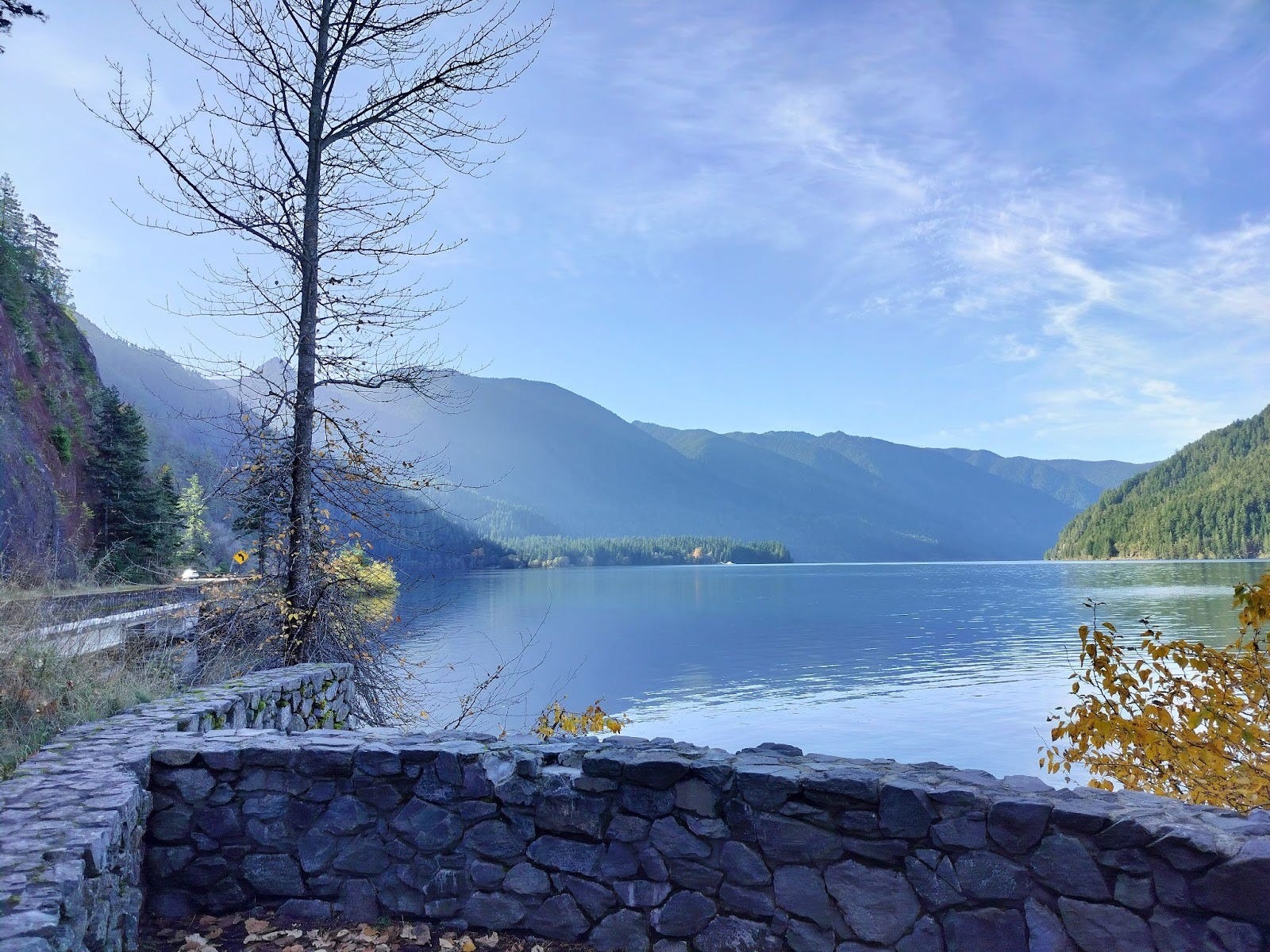
Two pristine lakes mark the northern edge of the Olympic National Park, one on each side of Highway 101, the local community’s backbone. Area legend holds that the Storm King hurled a boulder down the mountain to stop the fight between warring tribes, creating the twin lakes and sowing peace in the process.
A fitting metaphor, as five local tribes, a college, multiple non-profits, and the local governments of Clallam and Jefferson counties came together to form the NOPRC in response to the Recompete opportunity.
Collaborating on a scale like this was a new experience for the region. Some groups had previously cooperated on regional planning exercises, but never so thoroughly on the implementation of concrete economic development initiatives. Despite sharing similar industry bases, infrastructure, and economic blows, each entity mostly charted its own course.
Recompete changed that.
The size of the grant on offer made officials in the two counties stand up first. They recognized a potentially transformational funding stream that would allow them to reclaim some control over their economic destiny.
EDA had also made it clear that it expected implementation areas to be defined by economic and geographic logic. Communities in the region — bound together by fate and their shared highway — would have to join forces.
As the application started gaining traction, the economic development corporations, community non-profits, and tribal governments all came into the fold. A truly regional coalition took shape.
Getting to work
The NOPRC plan consists of multiple projects designed to complement each other. Looking at some of the projects individually makes it possible to then zoom out and see how the pieces all fit together.
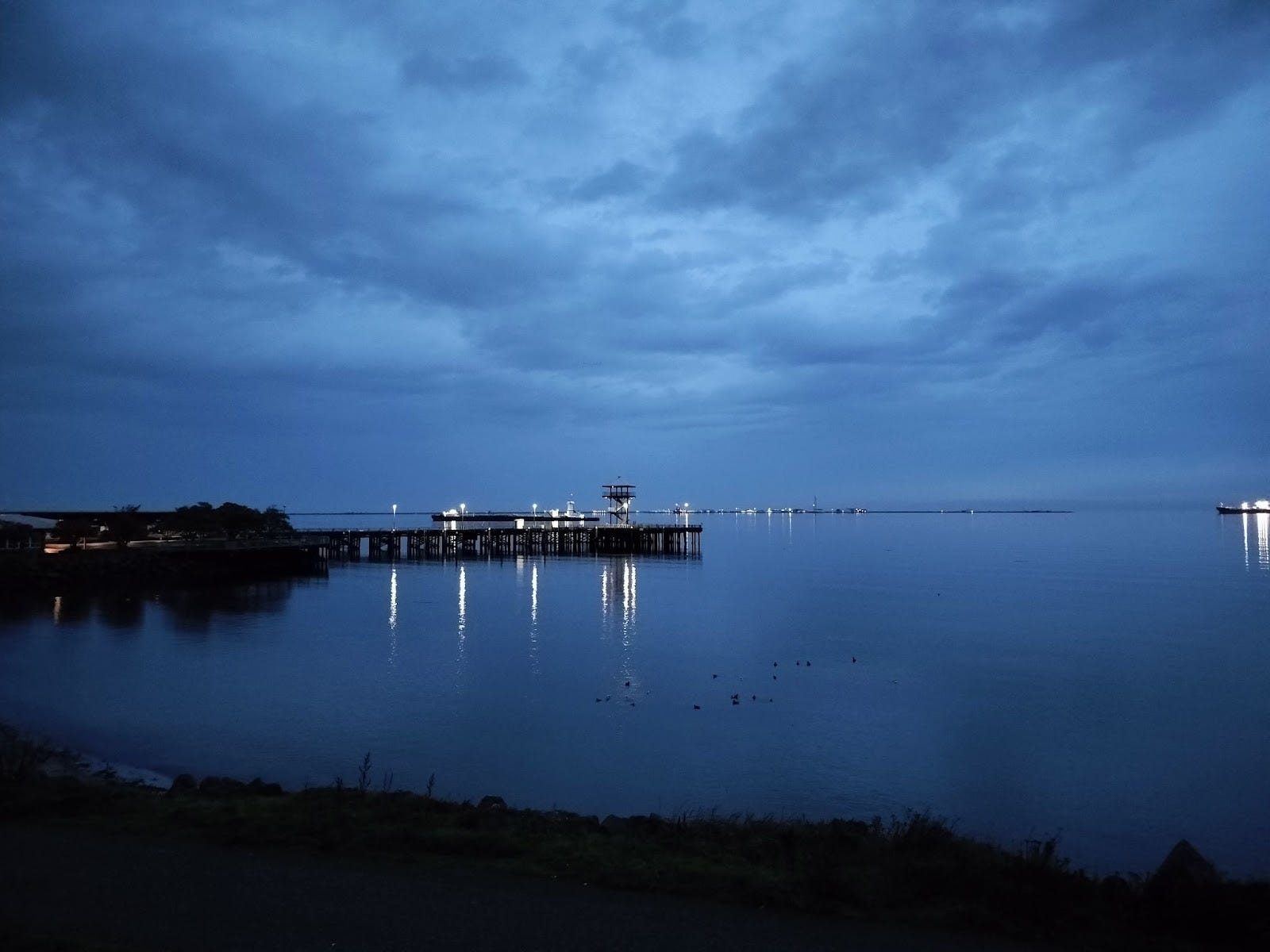
One project entails acquiring a set of three barges. The first barge will transport the peninsula’s products throughout the Puget Sound to hubs in Bremerton or Tacoma. Another ocean-going vessel will open access to Oregon and California. And a third, “spud” barge can go wherever it is needed, able to dock right off the shore of any community without established port infrastructure.
The goal of having three new barges is to integrate the regional economy more tightly and increase access to external markets. Take the Makah, an isolated tribe two hours farther west from Port Angeles, the economic hub of the northern peninsula. Two-lane roads that can wash out in storms provide costly and intermittent access for trucking the Makah’s timber, its primary export, to Port Angeles. The barges will allow more predictable transportation at scale.
Another Recompete-funded initiative — a thermal modification unit adapted to turn the area’s uniquely wet wood into durable building materials and operated by the Composite Recycling Technologies Center, another affiliated non-profit — will help the Makah’s timber find new markets. Similar opportunities for product and process innovations abound in this network of small coastal communities built around the forestry and maritime industries.
The Recompete money will also give the region a chance to pilot the use of mobile training units, which will bring technical skills training and community college curriculums to residents in the most remote corners of the region, where a multi-hour commute to a physical campus is a nonstarter. The training modules will also be brought on-site to far-flung employers, co-developing curricula that will both upgrade existing workers’ skills and allow new jobseekers to obtain a locally trusted credential.
In Forks — yes, Twilight fans, that Forks — the technical assistance portion of the award allowed the city to do two things. First, it hired a full-time economic development planner so the city attorney could have one less job to do. (Civic leaders in rural areas have to wear a lot of hats.) Second, the city expanded the local industrial park so that one employer could grow without displacing another, a top priority and an early win.
Meanwhile, the local YMCA and Olympic Community of Health tend to the needs of people who “are dealing with a lot of life,” in the words of one local leader I spoke with. They connect the long-term unemployed with the child care, health care, and transportation they need to achieve a modicum of stability. And then they connect them to the community college, which itself is a bridge to employers. These services are vital because getting people back into work requires solving the problems that are keeping them out of work in the first place.
One part of the Recompete coalition is getting people back on track. The other is making sure there’s a local job for them on that track.
In the first year alone, the coalition has enrolled 208 prime-age individuals in its programs, including 77 in workforce training — more than double their goals. They’ve directly engaged with 105 local employers in ways that range from providing apprenticeships to participating in hiring events or offering jobs. Working directly with employers cultivates that job pipeline so that participants don’t get disaffected after participating in Recompete-related programs. They get a job.
That’s Recompete: economic development as workforce development. Social work, civic innovation, problem solving — and all of it with an eye on the prize: a good job, near home, for folks who had given up on the idea.
The trouble with Washington (DC)
The first year of a five-year award should be all about laying the groundwork and building momentum for the half-decade of make-or-break effort to come.
But as NOPRC has been ramping up, Washington, DC, has been slowing down — culminating in the longest federal government shutdown in history, the effects of which still linger. Steady progress feels like it’s giving way to staggered advances.
The local port is sitting on two bids for the first two of three barges it wants to buy. While waiting for approval from the federal government to execute the contract, the port risks losing the barge meant for transit within the sound to a competing customer.
As for the spud barge, the U.S. Navy has a surplus one in Bremerton that would be perfect. But because of the shutdown, it has been weeks since anyone was there to pick up the phone and complete the sale to the port.
The mobile welding training unit? It is stalled mid-manufacture, uncertain whether and when the money will be disbursed to pay for it. The Peninsula College staff tasked with developing and delivering the curriculum? Partially furloughed.
And the organization in charge of rural and tribal technical assistance and capacity building? Headcount is down by more than half this year, as other federal grants were canceled and funding streams dried up.
One of the challenges is that almost all Recompete grantees operate on a reimbursement basis. As they incur expenses, they bill them to EDA, which then releases the money.
After the gears of government slowed in January, approvals that used to take days started taking weeks or months.
Then the shutdown came. With almost every meaningful action subject to some sort of approval from EDA staff, who were on furlough themselves, the coalition found its hands tied.
The suspension of all federal activities was probably the most disruptive blow yet, because local governments and their partners don’t have the luxury of pausing their clocks, too. Time keeps ticking, services need to be delivered, and bills and workers need to be paid. There was palpable fear that if the shutdown continued much longer, the coalition might unravel.
Although the shutdown finally ended last week, the NOPRC hasn’t escaped limbo just yet. Hanging low over the peninsula is the same question hanging over nearly every federal grantee in America today: what if the funding gets rescinded?
Recompete awards were some of the last ones issued by the Biden administration. The program enjoyed strong bipartisan backing in Congress and the awards were issued with unprecedented rigor and transparency, but their recency makes people nervous. A year after the 2024 election, there’s still been no official expression of commitment to Recompete from the new administration.
On the ground, NOPRC pushes forward alongside the five other Recompete pilots, hopeful and vulnerable at the same time. After all, three thousand miles from DC politics, there’s an economy to rebuild.
The uncertainty looms prominently, though. This local coalition may already be mid-implementation, but their initiatives are still in the formative stages. That makes them fragile, and still too young to stand independently.
Even hoped-for funding from philanthropy is dependent on the federal grant. Contingency plans might help save pieces of what this coalition has started to build, but it would be a salvage operation.
The region simply doesn’t have the resources to execute this strategy on its own.
A new model of economic development
Maybe it’s just my own sunny optimism, but I do see a ray of hope breaking through the clouds, the result of what I saw on the ground: economic development done right. Economic development done in its entirety.

Recompete is the opposite of a heavy hand from Washington. It is enabling, taking a supportive back seat to empower places to execute on their locally-derived strategies. It tackles challenges that have long frustrated Americans, and its focus on work is clearly aligned with the Administration’s priorities.
There are no blank checks and EDA isn’t hands-off, but agency staff act more like coaches or mentors, helping places refine their ideas along the way.
Recompete is also self-directed — nobody in Washington (DC) could have come up with the barges, but it is a solution so tailored to the unique circumstances of this local economy that it’s a no-brainer.
As a competitive grant program, Recompete also gives communities something to compete for, tapping into the country’s deepest values. And even though it is reserved for economically distressed areas, it is an inveterately optimistic program, engendering a we-can-do-this mentality in places that might otherwise succumb to fatalism.
It’s not perfect. EDA contracted independently with seven different entities to manage the coalition and the core projects under the NOPRC umbrella, many of which have multiple subawardees in turn. The proliferation of contractual relationships increases complexity and administrative overhead for the whole coalition — and for EDA staff. The individualized grants create space for coordination and accountability failures within the coalition too.
Given the new ground that EDA was breaking by making such large awards, segmenting them out may have been appropriate in the pilot phase, but it feels like an obvious candidate for streamlining in future iterations of the program.
Arcane rules around what counts as a “construction” project (which thereby triggers EDA ownership claims of the asset) also prevented some high-potential projects from receiving funding. But this local coalition is still committed to finding other ways to bring them to fruition, and these are exactly the sorts of lessons one wants to learn from a pilot program.
The policy experiment America needs
The country has made too little progress restoring opportunity to left-behind areas, largely because we still know far too little about what works in economic development.
The Recompete Pilot Program was deliberately experimental to try to fix that. It is designed to prove the concept that enough federal support to make a difference, well-designed and combined with local ingenuity and action, can kickstart economic rebounds.
The North Olympic Peninsula is a particularly poignant background against which to run this experiment. Talk with locals long enough, and eventually you’ll hear that the region’s economic decline can be traced back decades ago to the imposition of endangered species protections on federal lands, which felled the local timber industry.
We know that such federal actions — even when justified on the macro level — have disparate impacts that can devastate local economies. Recompete is a trial in whether federal action can help set things right again, too.
Whether it succeeds or not, we’re obligated to learn everything we can from it.
Why? Because this is what Americans want from Washington — real ideas and resources to empower communities to bootstrap themselves up the ladder. A policy specifically designed to restore work to the lives and communities from which it vanished.
Far from the corridors of power in one Washington, a powerful policy experiment is ready to play out in the other. It should be allowed to run its course.
The program was technically structured as a two-phase competition. Phase I awarded 24 approximately $500,000 strategy development grants, and Phase II awarded six of those initial winners large-dollar implementation grants. Congress initially authorized Recompete as a $1 billion program but has so far only appropriated $200 million.
I wasn’t previously aware of this initiative, and it certainly holds a lot of promise. If only Washington - the one on the east coast - wasn’t so dysfunctional, more focused on destruction and vengeance than on improving people’s lives.
Clallam County and Port Angeles continue to struggle. Last year we lost another 200-300 jobs from McKinley and the closure of Rite Aid, Big Lots and JoAnne. We are swimming in vacant commercial property. In fact, 30% of our downtown waterfront is vacant. I love the efforts that the Port is doing with regards to barging, free trade zone, at the airport, a new 19 acre zone for marine operations, etc. The issue is that we are struggling everywhere else. Please see my presentation if you want some other perspective. https://youtu.be/lRHz9qEJmuQ